

You open the patient portal, see a wall of abbreviations and numbers, and one or two are highlighted in red or orange. Nobody explained what they mean beyond a form letter that says "results reviewed" or "please discuss at your next visit." This guide exists to close that gap — a plain-language walkthrough of the blood test results people search for most, and what a borderline number generally does and doesn't mean.
This is educational information, not a diagnosis of your specific results. Reference ranges vary by lab, by age, by sex, and by the equipment used to run the test — always read the range printed on your own report, and bring genuine questions to your doctor rather than relying on any single article to interpret your personal results.
Why "normal" isn't always the most useful frame
Lab reports typically flag a result as in-range or out-of-range against a population reference — a useful first filter, but a blunt one. The more useful question is usually: where is this number relative to where it was last time, and what else is going on in my health at the same time? That's the exact gap ONU's AI health engine is built to fill — reading a single result in the context of your trends, not in isolation.
Cholesterol: LDL, HDL, and non-HDL cholesterol
Most lipid panels report a handful of related numbers, and it's easy to focus on the one you've heard of most (usually LDL) while missing a more complete marker.
- LDL cholesterol carries cholesterol to your cells and, at elevated levels, is linked to plaque buildup in artery walls over time.
- HDL cholesterol helps carry cholesterol back to the liver for removal.
- Non-HDL cholesterol is your total cholesterol minus your HDL — capturing LDL plus every other cholesterol-carrying particle linked to cardiovascular risk. Major cardiology guidance treats non-HDL cholesterol as a useful secondary target precisely because it's a more complete picture than LDL alone.
- Cholesterol/HDL ratio (total cholesterol divided by HDL) — generally, a lower ratio is considered more favorable, used alongside the individual numbers.
If your non-HDL cholesterol or ratio came back higher than your lab's reference range, that's a prompt for a conversation with your doctor, not a standalone verdict. Some people search for supplements to lower cholesterol — see ONU's supplement guide — but there's no substitute for tracking your own numbers over time and discussing any supplement with a healthcare provider.
A1C and blood sugar: what the number actually measures
Hemoglobin A1C reflects your average blood sugar over roughly the past two to three months. Using American Diabetes Association criteria, A1C results are generally categorized as:
- Below 5.7% — within the standard reference range
- 5.7% to 6.4% — the range associated with prediabetes
- 6.5% or higher on repeat testing — the range associated with diabetes
These are general population thresholds, not a personal diagnosis — only a healthcare provider can interpret your result in context.
GMI vs. A1C: why a wearable's estimate might not match your lab
If you use a continuous glucose monitor, you may have seen a Glucose Management Indicator (GMI) — a number calculated from your average sensor glucose readings. GMI and lab-drawn A1C can genuinely differ for the same person due to individual variation in how quickly glucose binds to hemoglobin (sometimes called the "glycation gap"). A difference isn't necessarily an error — your lab-drawn A1C remains the clinically validated reference point.
The Comprehensive Metabolic Panel (CMP): more than one number
A CMP bundles together several markers rather than testing one thing:
- Glucose, a snapshot of blood sugar at the time of the draw
- Electrolytes (sodium, potassium, chloride, CO2)
- Kidney markers (BUN and creatinine)
- Liver markers (ALT, AST, ALP, bilirubin, albumin, total protein)
A single flagged marker on a CMP is common and often not meaningful on its own — mild dehydration, recent exercise, or even time of day can shift several of these values.
What to actually do with a borderline result
- Don't over-react to a single flagged marker.
- Ask your provider what they'd want to see on a repeat test, and when.
- Track it over time — stable is different from trending in one direction.
- Bring your full context: sleep, stress, illness, and medication timing can all shift a result.
How ONU helps with lab results specifically
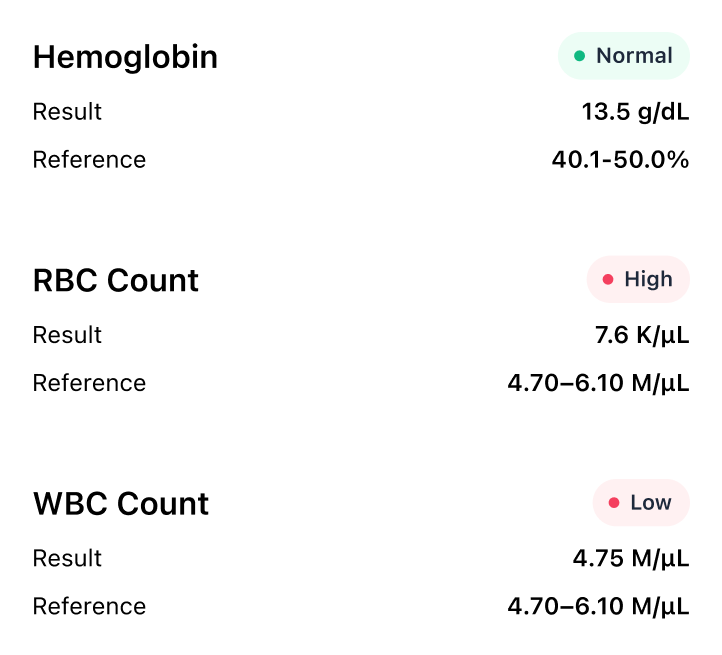
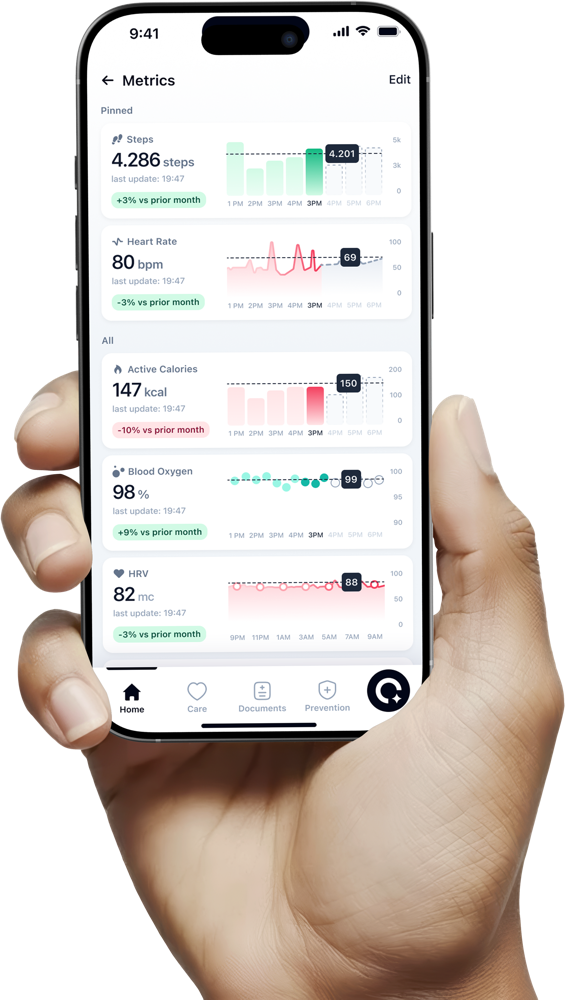
Upload any lab report — a PDF, a screenshot, or an exported file — through the ONU app, and the AI health engine extracts and structures each marker automatically, explains what it generally means, and tracks it over time alongside the rest of your health data. If you're curious what a full-body scan or additional lab panel might add on top of routine bloodwork, see ONU's guide to preventive checkups and at-home testing.
Frequently asked questions
Every claim, built on the same foundation
Plain-language, evidence-checked explanations of the biology behind your health data — organized by the kind of question that usually brings people here in the first place.
 1
1Blood Test Results Explained
Cholesterol, non-HDL, A1C, and metabolic panels — decoded in plain English, including what a borderline number is actually worth flagging to your doctor.
 2
2Sleep Score Explained
Deep sleep, REM, and why your score moves the way it does — plus research-backed ways to actually improve both, not just chase a higher number.
 3
3Why Am I Always Tired?
Tired but can't sleep, dragging through mornings, waking up unrefreshed — the most common, evidence-backed explanations, in plain language.
 4
4HRV Explained
What heart rate variability measures, what counts as a good resting heart rate, and how HRV connects to zone 2 training and real recovery.
 5
5Cortisol and Stress
What cortisol actually does in your body, what the viral terms get right and wrong, and which foods and supplements genuinely affect stress.
 6
6Acute vs. Chronic Stress
The actual difference between short-term stress and chronic burnout, and whether stress genuinely speeds up aging — without the scare tactics.
 7
7Biological Age Testing
VO2 max, biological age calculators, and the longevity metrics everyone's suddenly discussing — what's evidence-backed, and what's still unproven.
 8
8Full Body Scans & Preventive Checkups
What full-body MRI and CT scans actually involve, what physicians say about screening healthy adults, and where routine tracking fits in between.
 9
9Magnesium & Ashwagandha: A Practical Guide
Which magnesium form actually helps sleep, when to take it, and how much ashwagandha is typically used in studies — no supplement-aisle guesswork.
How this library is built
Every article here goes through the same process: a claim isn't published until it's checked against a primary, authoritative source — the CDC, NIH, WHO, American Diabetes Association, American Heart Association, or peer-reviewed research, depending on the topic — and every article stays inside ONU's wellness-lane guardrail: educational and non-diagnostic, with no disease, treatment, or cure claims anywhere. Where the science is genuinely unsettled or still developing, these guides say so directly, rather than overstating certainty for the sake of a cleaner narrative.
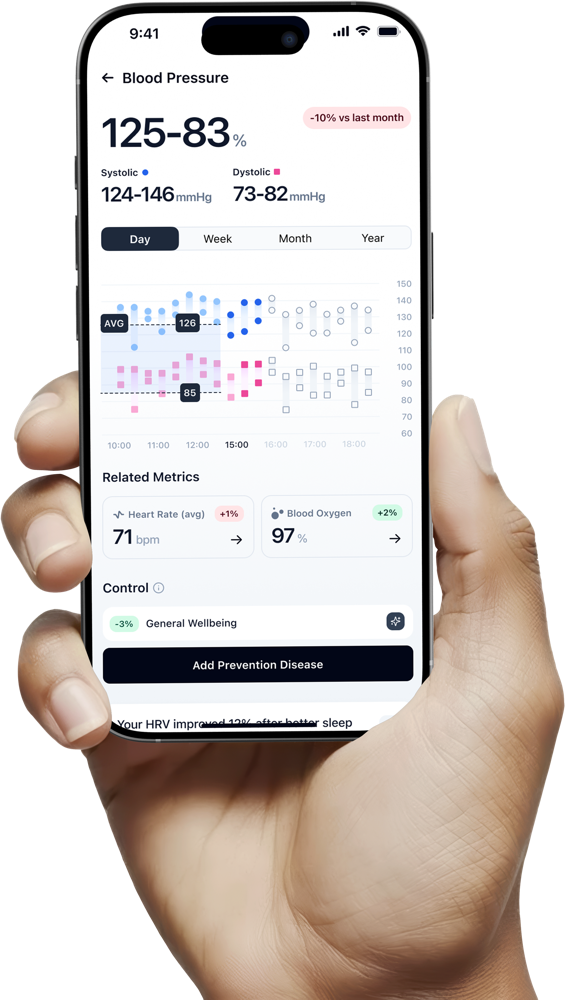
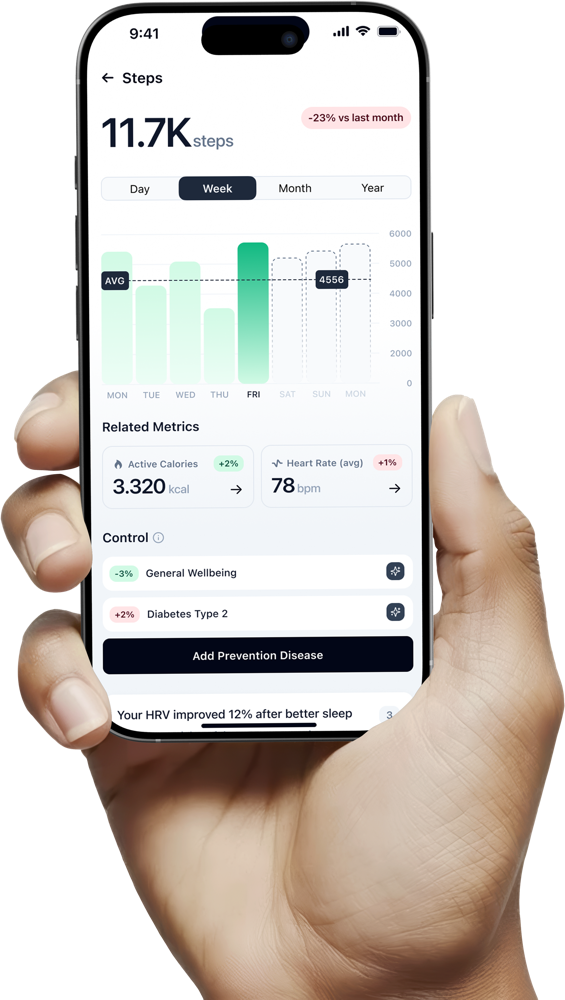
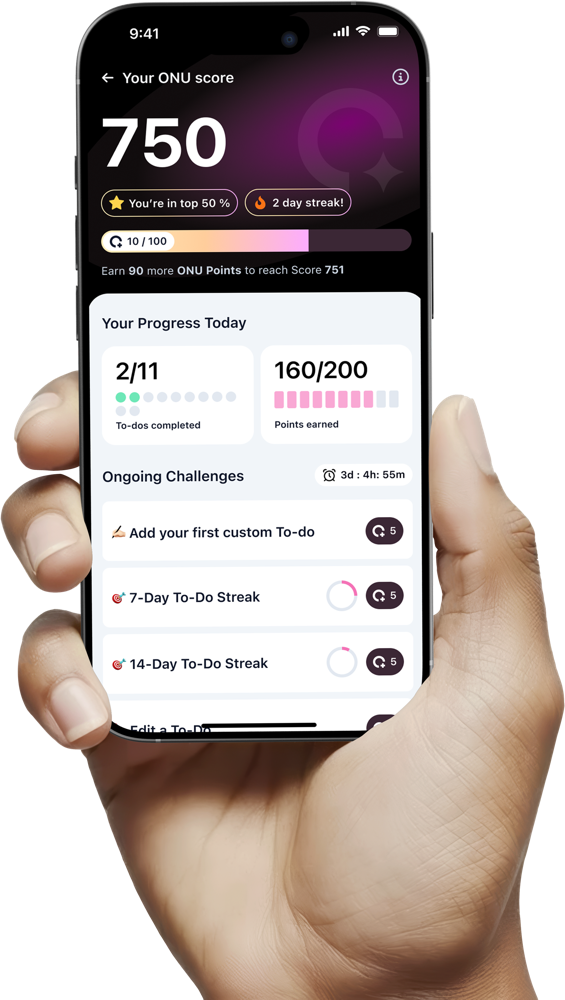
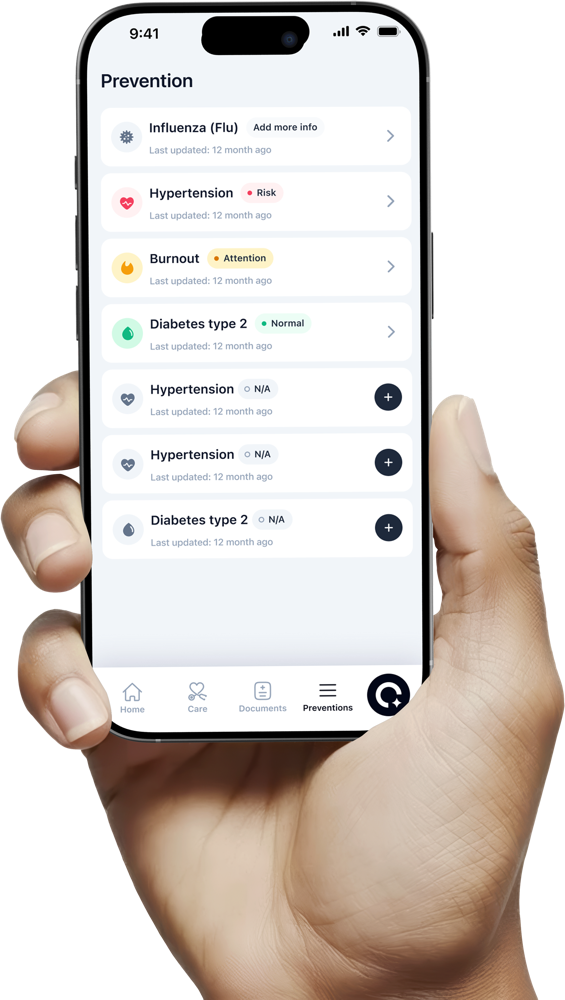
Nothing in this library exists purely as content marketing disconnected from the product. Each article maps directly to something ONU's app actually measures and interprets: the HRV guide explains the exact metric behind your recovery score, the Blood Test Results guide explains the same interpretation logic your uploaded labs go through, and the Cortisol guide explains the physiology behind your daily stress signal. Reading a guide here should make your own ONU Score meaningfully easier to understand, not just deliver abstract information disconnected from your actual data.
If you want a broad orientation rather than jumping straight to one specific question, a reasonable starting sequence is: Blood Test Results Explained (the foundation for understanding any lab work), Sleep Score Explained and HRV Explained (the two most common wearable metrics people misunderstand), then Cortisol and Stress (the physiology behind the terminology dominating health conversations online right now). From there, the remaining guides go deeper into specific, related questions.
See how ONU turns this knowledge into your daily ONU Score in the full product overview.
ACTION
Know it before it happens
ONU provides you with tools to build your healthy future; now it's your time to use them!