

Not all stress is the same, and treating it that way is part of why burnout can sneak up on high performers who are used to handling pressure. This guide draws a clear line between acute and chronic stress, explains what burnout formally is, and looks honestly at whether stress actually accelerates aging.
Acute stress: short, adaptive, and usually not harmful
Acute stress is your body's short-term response to an immediate demand. Your sympathetic nervous system activates, cortisol and adrenaline rise, and your body prepares for quick action. Once the trigger passes, a well-functioning stress response winds back down. In the right doses, acute stress isn't just harmless — it can sharpen focus and performance for a defined period. The problem isn't acute stress itself; it's what happens when the "winding back down" part stops happening.
Chronic stress: when the response never fully resets
Chronic stress is what happens when your stress response stays activated over an extended period, without adequate recovery between episodes. Researchers sometimes describe the cumulative physiological toll of this as allostatic load — the wear and tear that builds up when your stress-response systems are activated too often, for too long, without enough recovery.
What burnout actually is
The World Health Organization classifies burnout as "an occupational phenomenon" (not a medical condition), defined by three dimensions:
- Feelings of energy depletion or exhaustion
- Increased mental distance from one's job, or feelings of cynicism related to it
- Reduced professional efficacy
Burnout, by this definition, is specifically tied to work context — not a general catch-all term for feeling tired or stressed in life broadly.
How chronic stress shows up in your body's data
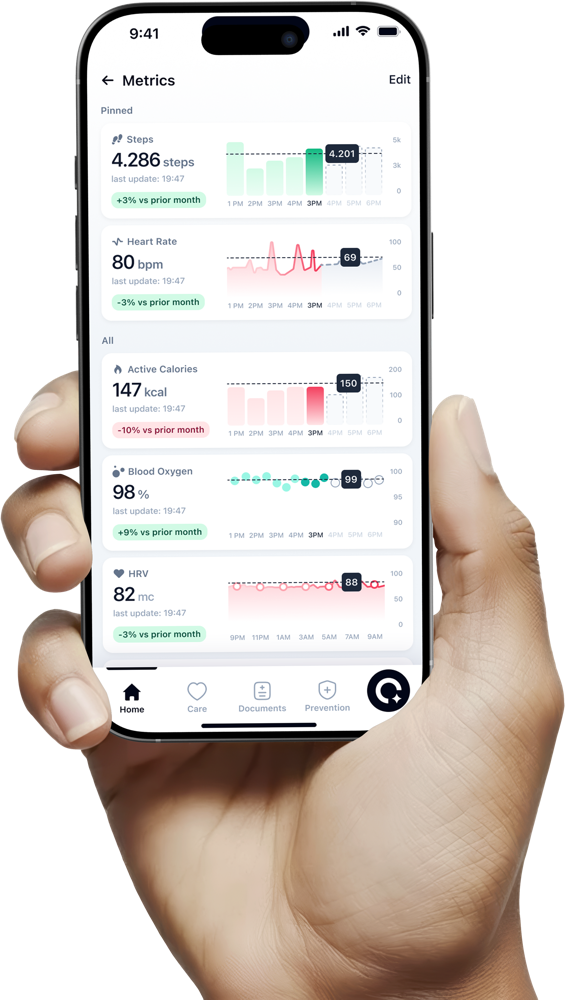
- Lower HRV trends — see ONU's full guide to heart rate variability
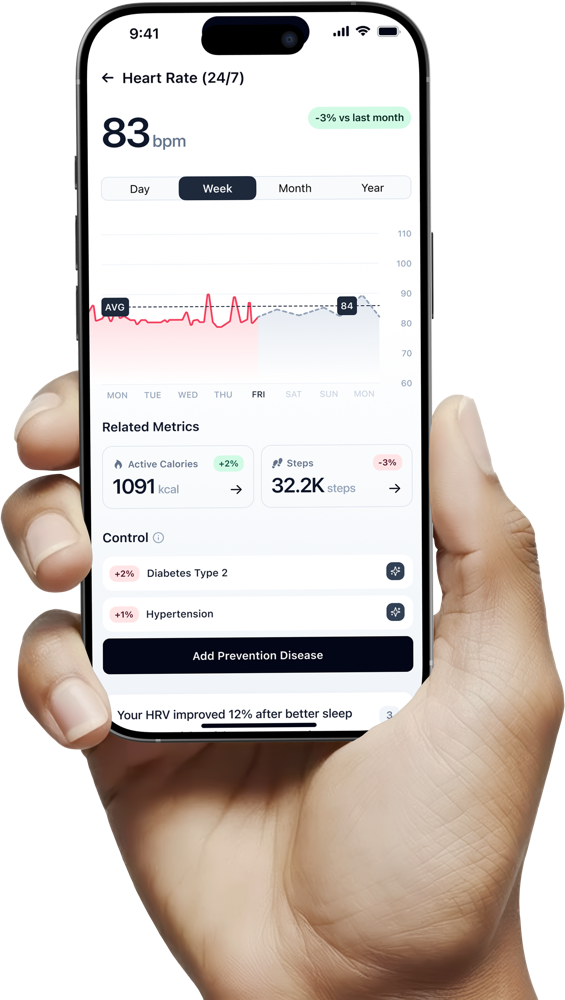
- Elevated resting heart rate
- Disrupted sleep architecture — lighter, more fragmented sleep, reduced deep sleep
Does stress actually age you?
There's real, but still-developing, evidence for a connection — not a settled, simple cause-and-effect story. Research beginning in the early 2000s found associations between chronic stress exposure and shorter telomeres in some populations under sustained stress. The takeaway isn't "stress definitely ages you by X years," but that managing chronic stress is a legitimate part of a longevity-minded approach to health. See ONU's guide to biological age and longevity.
Chronic stress, cortisol, and metabolic health — a note for women specifically
Stress physiology interacts with other hormonal systems, particularly relevant for women, whose hormonal patterns (across the menstrual cycle, and during perimenopause and menopause) interact with cortisol and stress response. Anyone noticing a meaningful shift in energy, weight, sleep, or mood alongside a major hormonal transition should bring that pattern to a healthcare provider.
What actually helps with chronic stress and burnout
- Real recovery time, not just less work
- Consistent sleep — see ONU's sleep quality guide
- Addressing the specific source, per the WHO's occupational framing
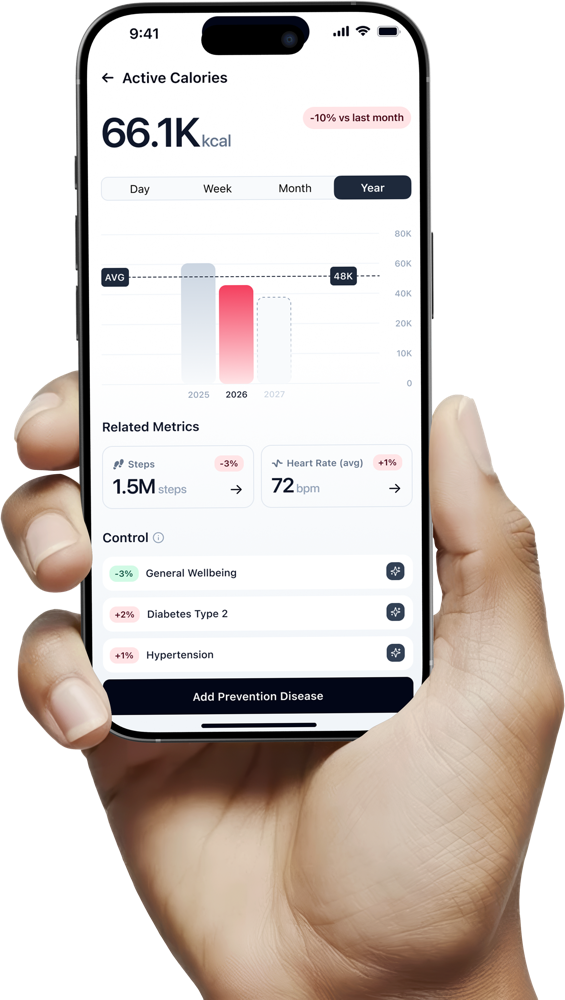
- Tracking your own trend to see whether changes are actually working
Recovering from chronic stress: what a realistic timeline looks like
Because the underlying physiological adaptations built up gradually, they generally take weeks to months of genuine recovery conditions to meaningfully reverse — not a single restful weekend.
Frequently asked questions
Every claim, built on the same foundation
Plain-language, evidence-checked explanations of the biology behind your health data — organized by the kind of question that usually brings people here in the first place.
 1
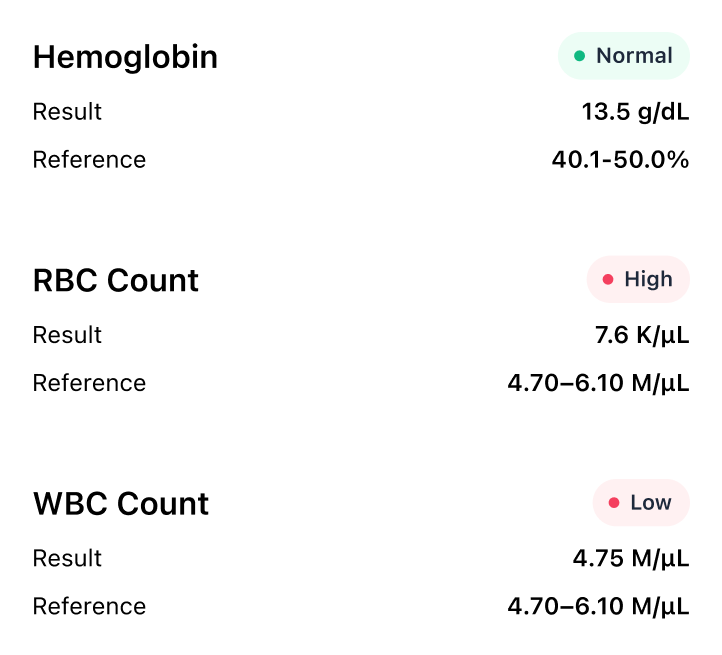
1Blood Test Results Explained
Cholesterol, non-HDL, A1C, and metabolic panels — decoded in plain English, including what a borderline number is actually worth flagging to your doctor.
 2
2Sleep Score Explained
Deep sleep, REM, and why your score moves the way it does — plus research-backed ways to actually improve both, not just chase a higher number.
 3
3Why Am I Always Tired?
Tired but can't sleep, dragging through mornings, waking up unrefreshed — the most common, evidence-backed explanations, in plain language.
 4
4HRV Explained
What heart rate variability measures, what counts as a good resting heart rate, and how HRV connects to zone 2 training and real recovery.
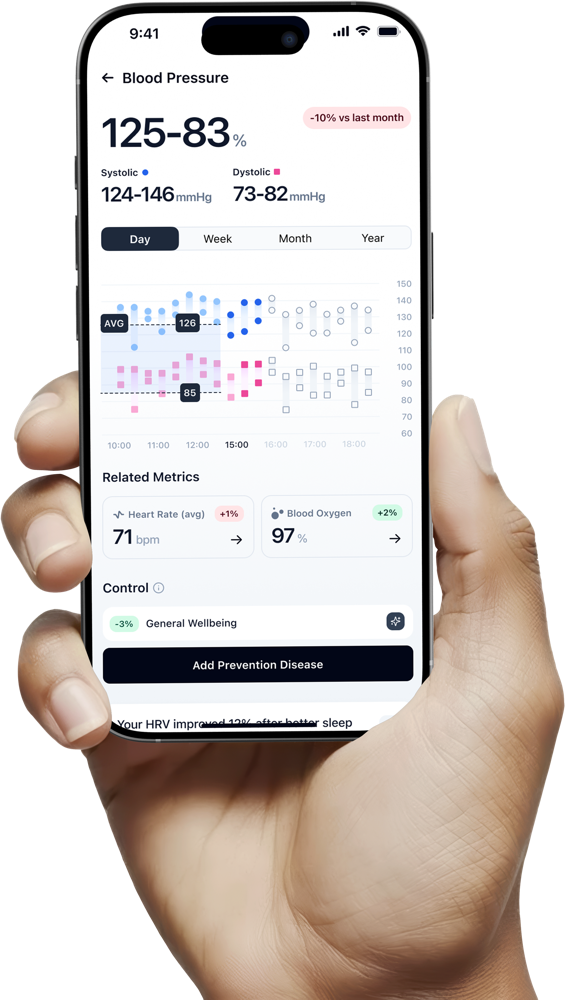 5
5Cortisol and Stress
What cortisol actually does in your body, what the viral terms get right and wrong, and which foods and supplements genuinely affect stress.
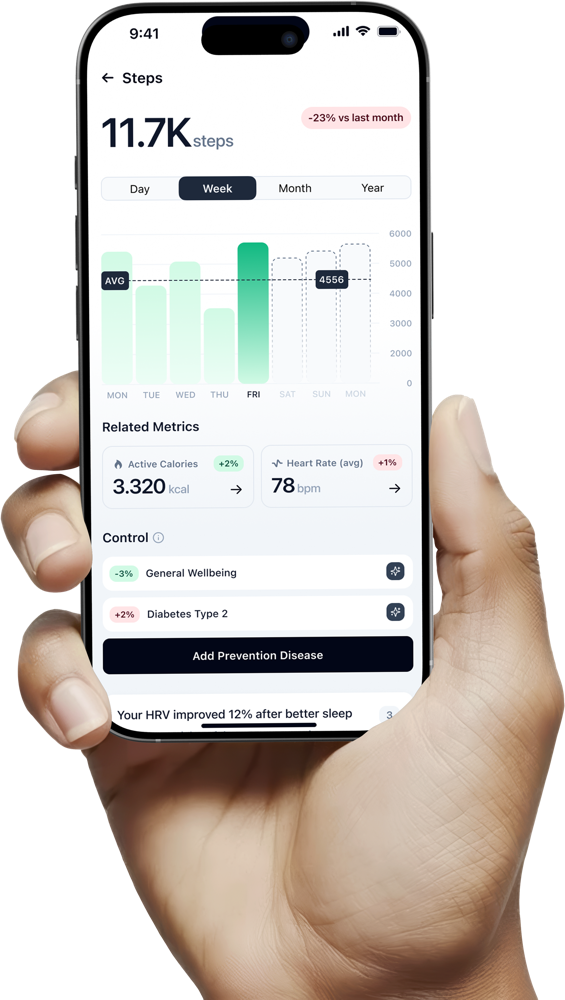 6
6Acute vs. Chronic Stress
The actual difference between short-term stress and chronic burnout, and whether stress genuinely speeds up aging — without the scare tactics.
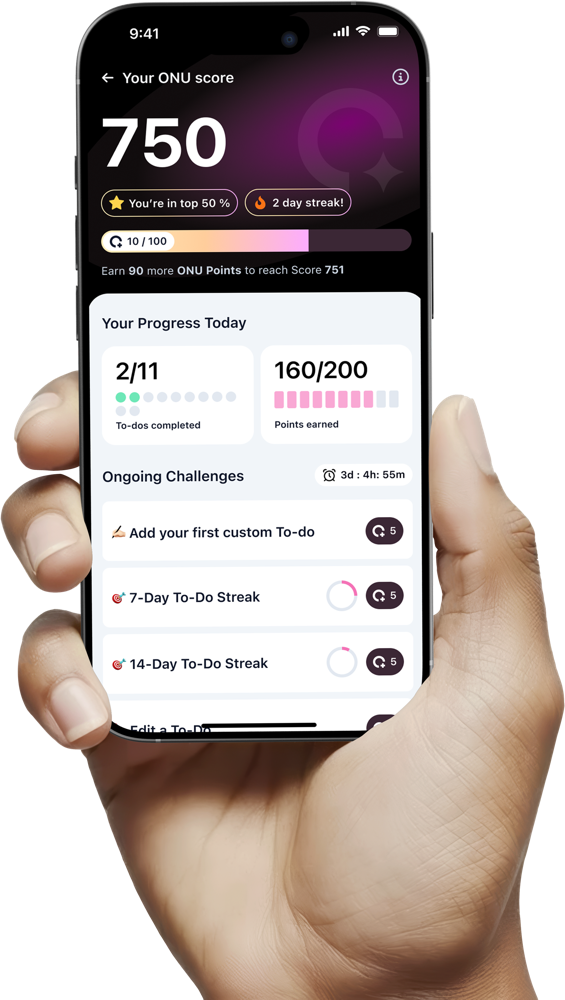 7
7Biological Age Testing
VO2 max, biological age calculators, and the longevity metrics everyone's suddenly discussing — what's evidence-backed, and what's still unproven.
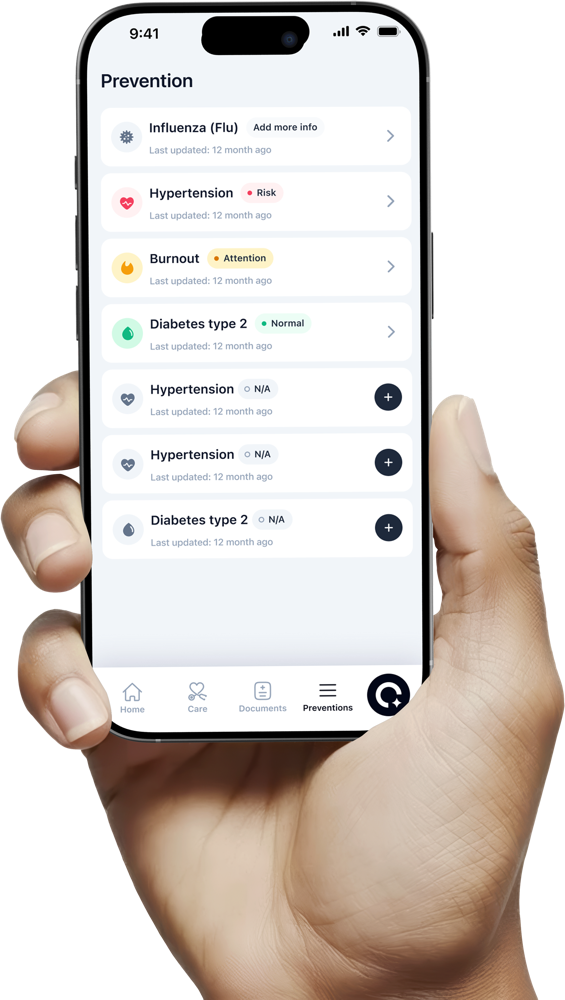 8
8Full Body Scans & Preventive Checkups
What full-body MRI and CT scans actually involve, what physicians say about screening healthy adults, and where routine tracking fits in between.
 9
9Magnesium & Ashwagandha: A Practical Guide
Which magnesium form actually helps sleep, when to take it, and how much ashwagandha is typically used in studies — no supplement-aisle guesswork.
How this library is built
Every article here goes through the same process: a claim isn't published until it's checked against a primary, authoritative source — the CDC, NIH, WHO, American Diabetes Association, American Heart Association, or peer-reviewed research, depending on the topic — and every article stays inside ONU's wellness-lane guardrail: educational and non-diagnostic, with no disease, treatment, or cure claims anywhere. Where the science is genuinely unsettled or still developing, these guides say so directly, rather than overstating certainty for the sake of a cleaner narrative.
Nothing in this library exists purely as content marketing disconnected from the product. Each article maps directly to something ONU's app actually measures and interprets: the HRV guide explains the exact metric behind your recovery score, the Blood Test Results guide explains the same interpretation logic your uploaded labs go through, and the Cortisol guide explains the physiology behind your daily stress signal. Reading a guide here should make your own ONU Score meaningfully easier to understand, not just deliver abstract information disconnected from your actual data.
If you want a broad orientation rather than jumping straight to one specific question, a reasonable starting sequence is: Blood Test Results Explained (the foundation for understanding any lab work), Sleep Score Explained and HRV Explained (the two most common wearable metrics people misunderstand), then Cortisol and Stress (the physiology behind the terminology dominating health conversations online right now). From there, the remaining guides go deeper into specific, related questions.
See how ONU turns this knowledge into your daily ONU Score in the full product overview.
ACTION
Know it before it happens
ONU provides you with tools to build your healthy future; now it's your time to use them!